

+44 (0) 1223 755950
+1 832 327 7413
Orders to United States ship from United States
Click on the image to see the image legend
| Target | Histatin 1 (HTN1) |
| Origin | Human |
| Expression | Recombinant |
| Tested Applications | WB, SDS-PAGE |
| Host | E. coli |
| Conjugation | Unconjugated |
| Form | Lyophilized |
| Activity | Not tested |
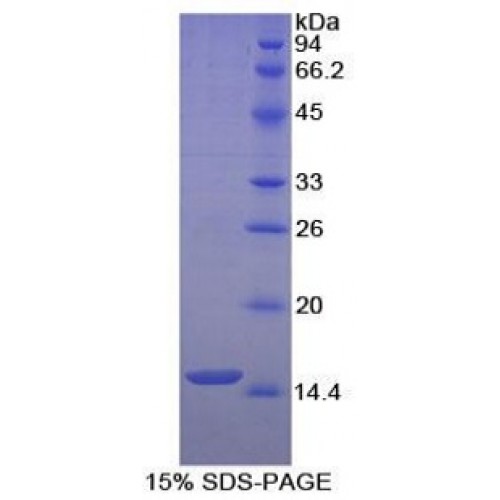
| Purity | > 95% |
| Reconstitution | Reconstitute in ddH2O to a concentration up to 0.5 mg/ml. Do not vortex. |
| Storage | Store lyophilized form at 2-8°C for up to 1 month. For longer periods, store lyophilized or liquid at -80°C. Avoid repeated freeze–thaw cycles. |
| Shelf Life | 12 months. |
| UniProt Primary AC | P15515 (UniProt, ExPASy) |
| UniProt Entry Name | HIS1_HUMAN |
| Gene Symbol | HTN1 |
| GeneID | 3346 |
| OMIM | 142701 |
| HGNC | 5283 |
| KEGG | hsa:3346 |
| String | 9606.ENSP00000424501 |
| Molecular Weight | Calculated MW: 11.5 kDa Observed MW (SDS-PAGE): 15 kDa Possible reasons why the actual band size differs from the predicted band size: 1. Splice variants. Alternative splicing may create different sized proteins from the same gene. 2. Relative charge. The composition of amino acids may affect the charge of the protein. 3. Post-translational modification. Phosphorylation, glycoslyation, methylation etc. may affect the band size. 4. Post-translational cleavage. Many proteins are synthesised as pro-proteins, and then cleaved to give the active form. 5. Polymerisation of the target protein. Dimerisation, multimerisation etc. will increase the band size observed. |
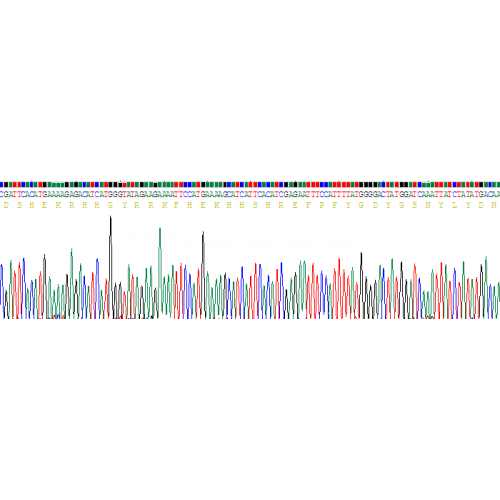
| Sequence Fragment | Asp20-Asn57 |
| Sequence | D SHEKRHHGYR RKFHEKHHSH REFPFYGDYG SNYLYDN |
| Tag | N-terminal His tag |
| Buffer | Prior to lyophilization: 20 mM Tris, 150 mM NaCl, pH 8.0, containing 0.01% Sarcosyl, 5% Trehalose. |
| Concentration | Prior to lyophilization: 50 µg/ml |
| Availability | Shipped within 5-7 working days. |
| Note | THIS PRODUCT IS FOR RESEARCH USE ONLY. NOT FOR USE IN DIAGNOSTIC, THERAPEUTIC OR COSMETIC PROCEDURES. NOT FOR HUMAN OR ANIMAL CONSUMPTION. |
 (
(